Make Sail review: design ships and brave the central storm
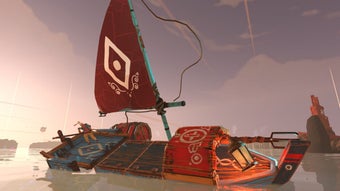
Make Sail, from Popcannibal, is a physics-based simulation that asks players to design vessels and navigate a perilous ocean. You start on a crude raft, scavenge parts across a procedurally arranged archipelago, and assemble bespoke ships that must handle realistic wind, currents, and a central storm. The game pairs construction with dynamic weather, scavenging upgrades, an adaptive soundtrack, and optional Twitch viewer tools. It targets fans of physics simulators and creative builders who value experimental exploration and iterative design.
What kind of game is it?
In this game, you alternate between designing vessels and testing them at sea; that is the emergent core loop. The experience blends construction, exploration, and navigation under realistic wind and water forces. Players must judge weight distribution and sail placement to move efficiently. The loop rewards iterative experimentation and real-world sailing tactics, turning design choices into moment-to-moment control outcomes rather than abstract statistics.
Does it have a multiplayer mode?
Here, the game is explicitly single-player, built around solitary exploration and creative construction. It does not include cooperative or competitive modes. Streaming tools augment that solo focus by letting viewers influence the session: names for islands and triggered events are available through built-in Twitch features. Those tools change audience engagement without altering the game’s single-player structure, preserving a consistent experience for the active player.
What does the game look and sound like?
On the water, art leans toward stylized, open forms with a calming palette that keeps visual clutter low. Sound design supports exploration: an original score adjusts to player progress and environmental intensity, reinforcing moments of discovery or danger. The interface favors direct manipulation in the construction view, and audio cues communicate wind shifts and storm approach, which helps situational awareness when navigating complex weather.
Is it hard to get started?
At first, progression is patient and demands learning by doing. Players begin with a simple raft and must scavenge materials and blueprints scattered across islands to improve their craft. The physics model supports maneuvers such as tacking and jibing, so effective travel requires understanding wind angles and hull response. However, there is no multiplayer tutoring, and the early learning curve can feel deliberate for newcomers.
Who should play it and who may want to wait
The game suits patient simulation fans and builders who enjoy learning systems through repeated tests and patient iteration. Players seeking cooperative play or fast-moving development may find the current state limiting, given reported technical problems during early access. For those who accept these constraints, the title rewards measured experimentation across multiple sessions and steady engagement.